Prime Architect
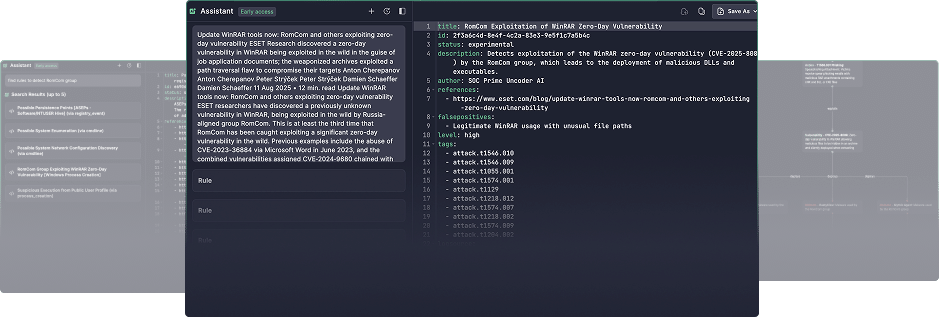
A custom built LLM hosted by SOC Prime designed specifically for Detection Engineering work. The model works with our detection library delivering high levels of accuracy while keeping your data private.
Used Daily by 11,000+ SOC Teams


“It Made a Security Operations Life Easier”
Private by Design
- Open-weight LLMs hosted inside SOC Prime infrastructure, not a third-party AI API, using deterministic results with AI.
- An LLM Firewall inspects every prompt and response
- Your data is never used to train models
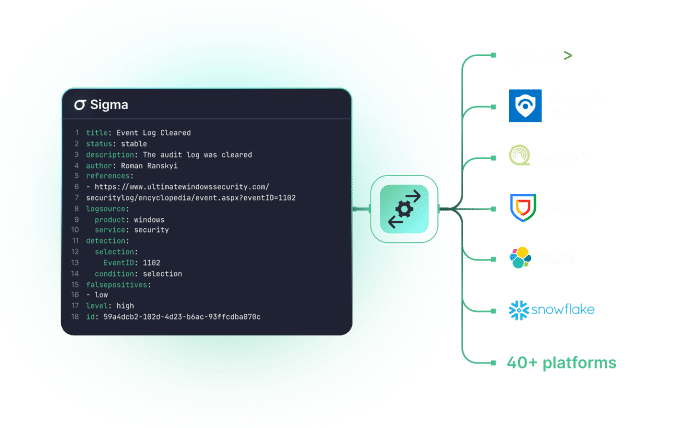
Translate Detection Rules
- Convert Sigma rules into 48 SIEM and platform languages using a native translation engine, not just an LLM’s best guess
- Translate directly between 21 native platform languages when you’re migrating, not starting fresh
- Map fields to your own schema so translations match your environment from the start
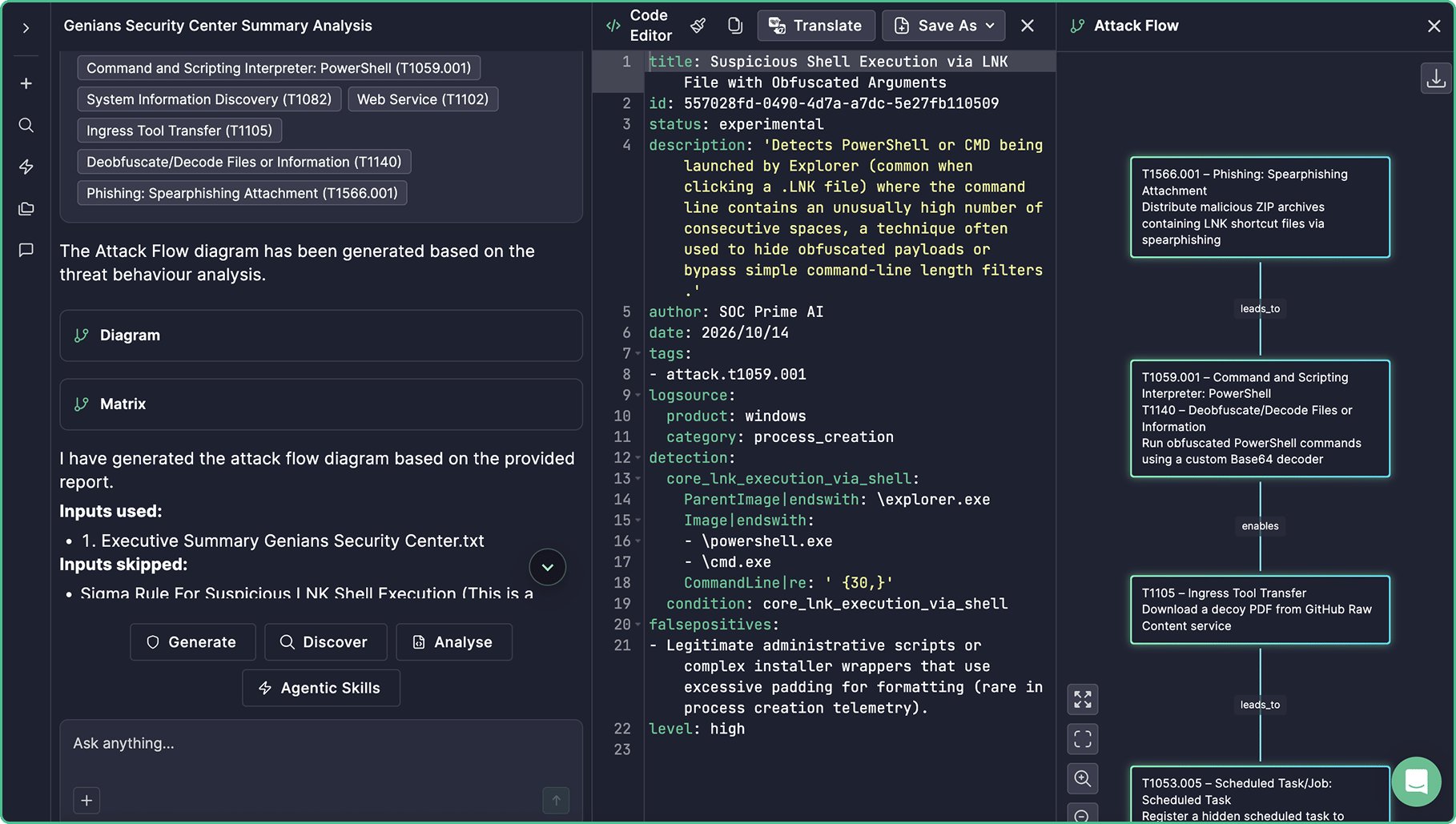
Generate and Interrogate Threat Reports
- Turn a threat report into a behavior rule or IOC query in minutes
- Auto-tag Sigma rules with MITRE ATT&CK techniques
- Visualize adversary activity as an Attack Flow straight from the report
Validate & Optimize Detections
- Validate syntax and structure before a rule ever reaches production
- Optimize queries for performance across 65 languages
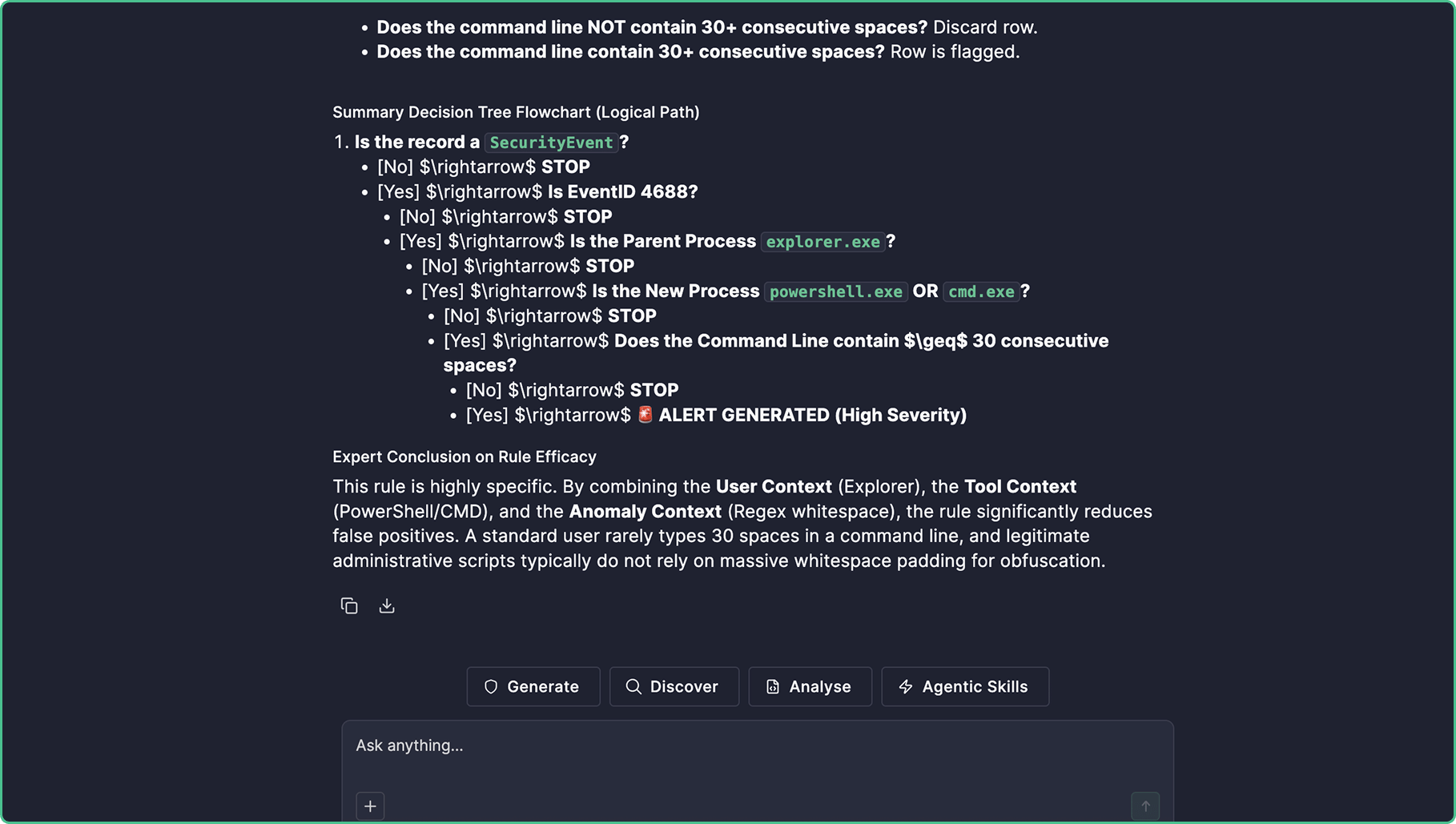
- Generate decision trees and plain-language summaries so anyone on the team can understand what a rule actually does
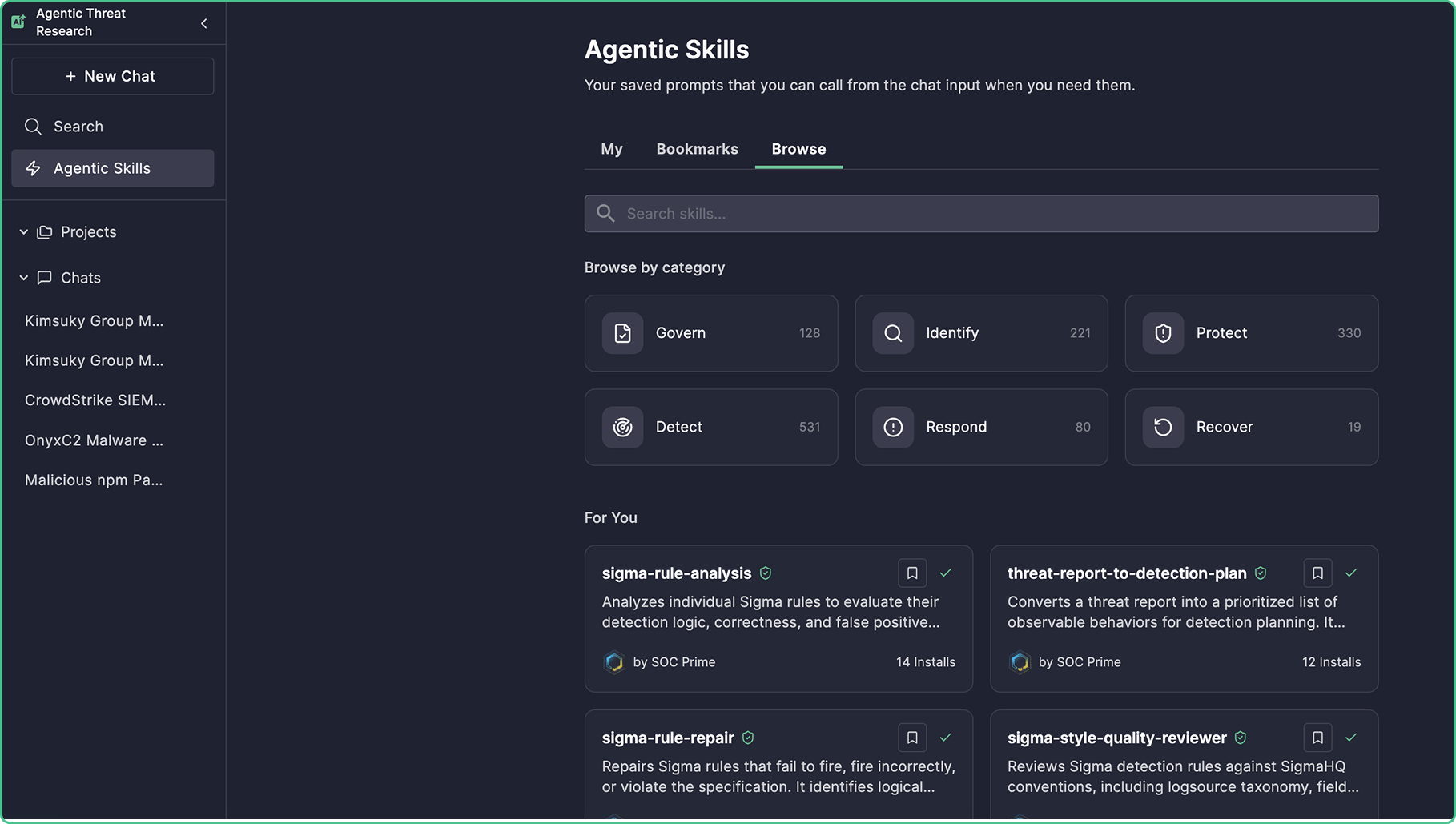
Agentic Threat Research
- Chat with purpose-built AI tools across three steps: Generate, Discover, Analyze
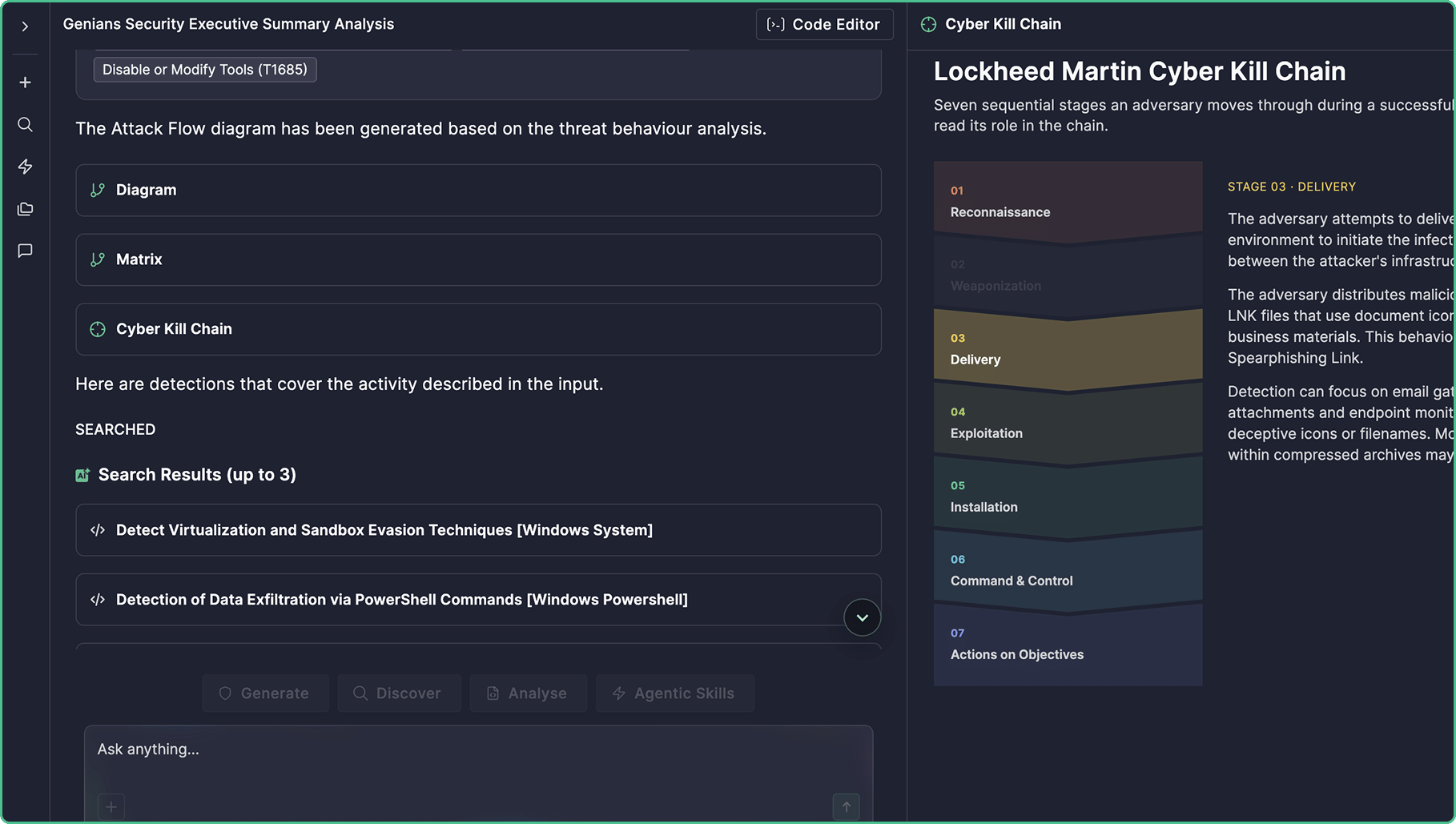
- Run Deep Threat Research to get a summary, attack flow, related detections, and Kill Chain, Pyramid of Pain, and Diamond Model views in one pass
- Add context with your own playbooks and reports, query your MISP instance, or turn on web search for the latest CVEs and campaigns
Countries
155
Organizations
11,000+
Users
60,000+

Trusted by Enterprise SOC Teams









