PRIME DETECT
Not another rule set – a detection layer that thinks upstream
Trusted every day by teams that defend the world in cyber domain


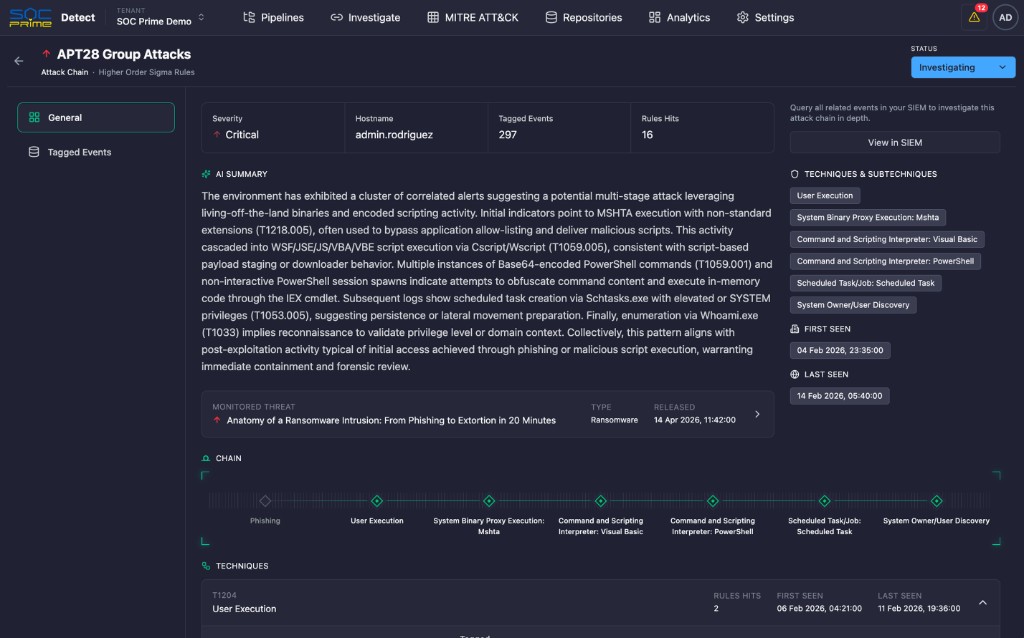
The speed of AI attacks require more than a SIEM. Prime Detect deploys thousands of detections against your data stream pre-SIEM to identify threats faster and provide the broadest coverage available in the market. Attacks are chained together and fuzzy logic is applied to capture a full picture of the attack.
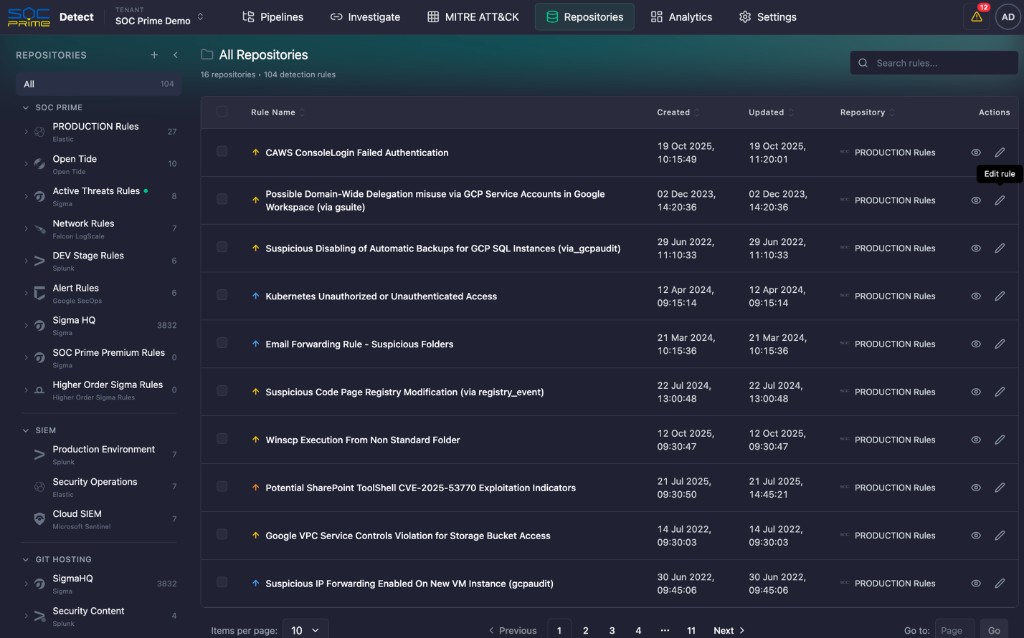
- Applies Sigma rules to streaming events
- Each match carries severity and ATT&CK technique
- Needs no changes to your existing SIEM
- Rules run on your Kafka and Kubernetes
- Applies 20,000+ behavior rules to streaming events
- Scales on hardware you already operate
- Supports both air-gapped and cloud deployment
- Runs with no outbound connection required
- Open source with a commercial license
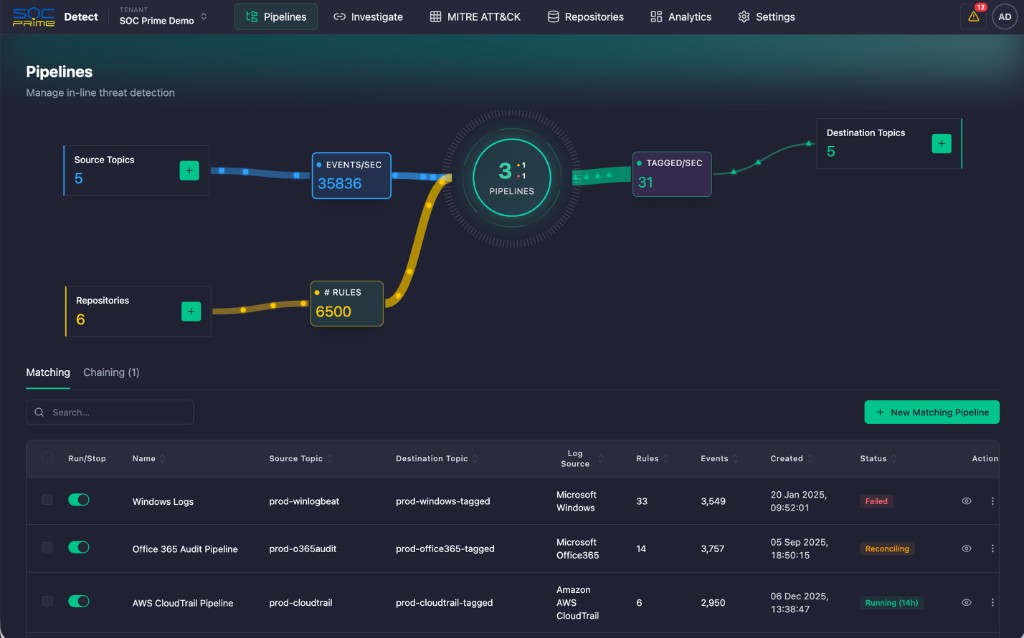
- Output of Detect is high value tagged telemetry
- Tagged events become structured data that AI systems can leverage
- Power automated triage, correlation, and response
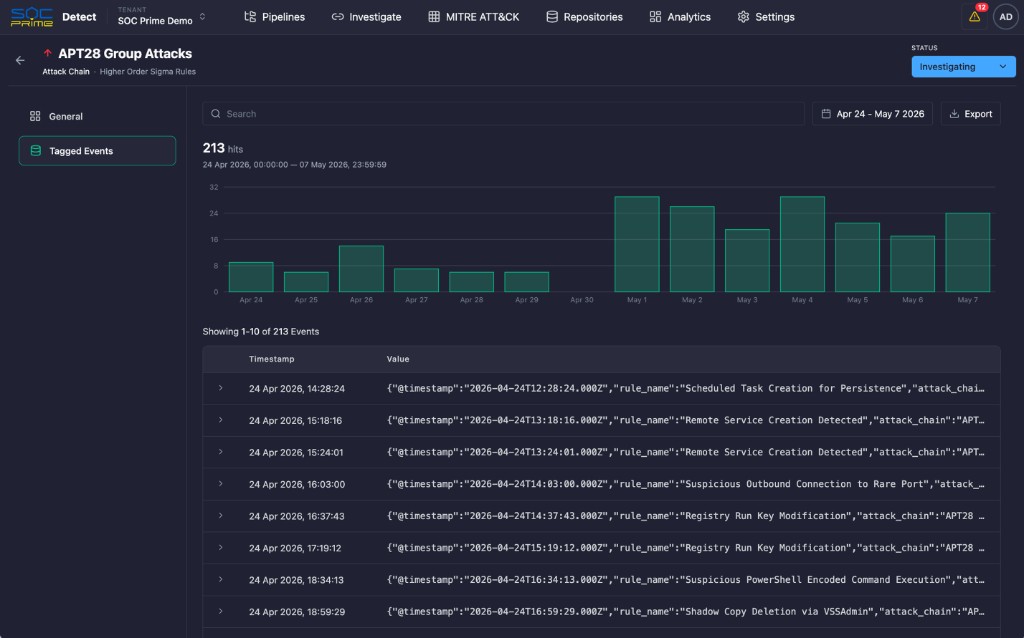
- Route high priority tagged events to SIEM
- Send low-value events to cheap storage
- You control what goes where. ~93% of telemetry is tagged
WHY PRIME DETECT?
Your SIEM has limits. Prime Detect doesn’t.
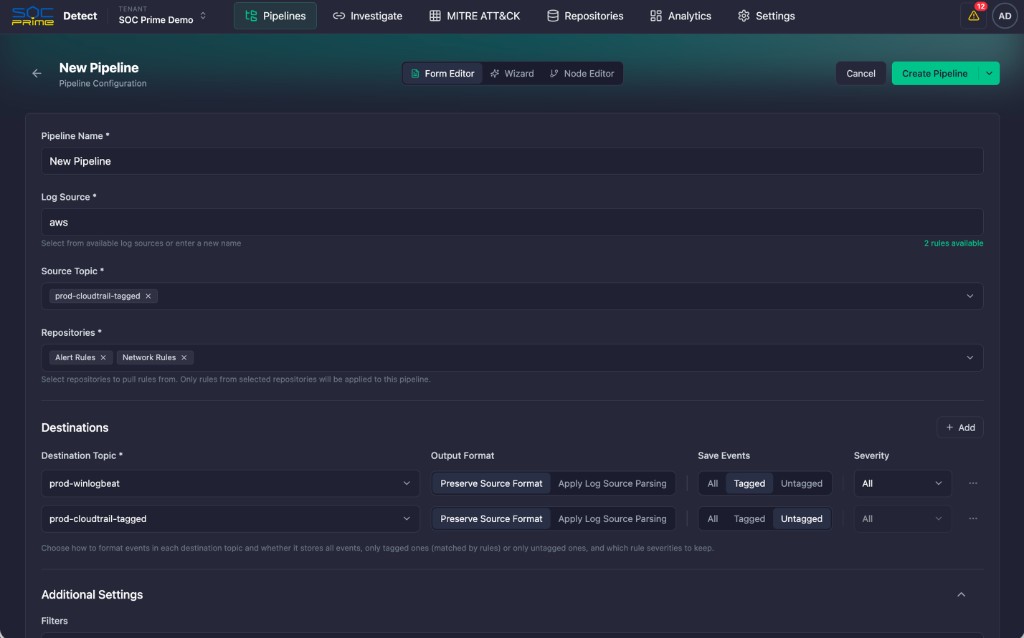
- Run thousands of detections simultaneously without the SIEM bottleneck
- Scales with hardware, not vendor pricing tiers
- Full ATT&CK coverage becomes achievable, not aspirational

~500
Average max detections in SIEM
20,000+
Detections in Prime Detect
200
Average number of detections deployed per year









We've received your form
Thank you!
Countries
155
Organizations
11,000+
Users
60,000+

Trusted by Enterprise Teams building AI SOC capabilities


Frequently Asked QuestionsFAQ
At the stream layer, Prime Detect processes events before SIEM ingest, which means the events that reach the SIEM’s correlation engine arrive as pre-classified records carrying severity and technique context rather than as raw telemetry. Processing only after ingest means every event competes for analyst attention. There’s no upstream classification.
At the pipeline layer, Prime Detect tags events and can be configured to route by priority to the SIEM or other location. Because SIEM licensing is typically volume-priced, cutting the volume of low-value events that enter the SIEM reduces ingest cost directly. High-priority events still reach the SIEM for correlation. Lower-priority telemetry routes to less expensive storage.
By matching Sigma-based detection rules against streaming data before SIEM ingest, Prime Detect tags events with severity and MITRE ATT&CK technique context. Each rule match produces a record carrying the technique ID and severity level. Downstream systems can query the classified event stream by technique and severity.
Tagging events with MITRE ATT&CK techniques at ingest gives analysts a technique classification at first glance. Prime Detect attaches this context before events enter the analyst queue. That classification shapes triage priority and routing decisions, and the same technique label travels with the event into routing rules, SIEM queries, and AI systems downstream.
Events pass through Prime Detect at the stream layer before SIEM ingest and correlation queuing. Pre-SIEM processing applies detection rules as events arrive in the pipeline, rather than waiting for the SIEM to ingest, index, and schedule correlation. In-SIEM detection can’t fire rules until ingest and indexing finish.
By applying 20,000+ behavior rules at the pipeline layer ahead of SIEM ingest, Prime Detect balances SIEM ingest costs and detection quality. Only high-priority tagged events enter the SIEM. Volume-based licensing costs fall because lower-priority events route to less expensive storage, where the full telemetry record stays available.
Classifying events before the analyst queue is how Prime Detect reduces triage time. Pre-classified events carry technique and severity labels on arrival, which removes the initial classification step from triage. The analyst’s first action is to evaluate a labeled event.
Stream-layer rule matching against Sigma detection content is the primary method Prime Detect uses for attaching severity and MITRE ATT&CK technique metadata to events. Sigma rules, maintained by the global threat-research community, define the conditions and technique mappings. When an event matches a rule, the match record carries the ATT&CK technique reference and assigned severity from the rule definition. The event reaches SIEM ingest already tagged.